Mastering GitHub Copilot CLI: Interactive vs Non-Interactive Modes – A Step-by-Step Guide
Overview
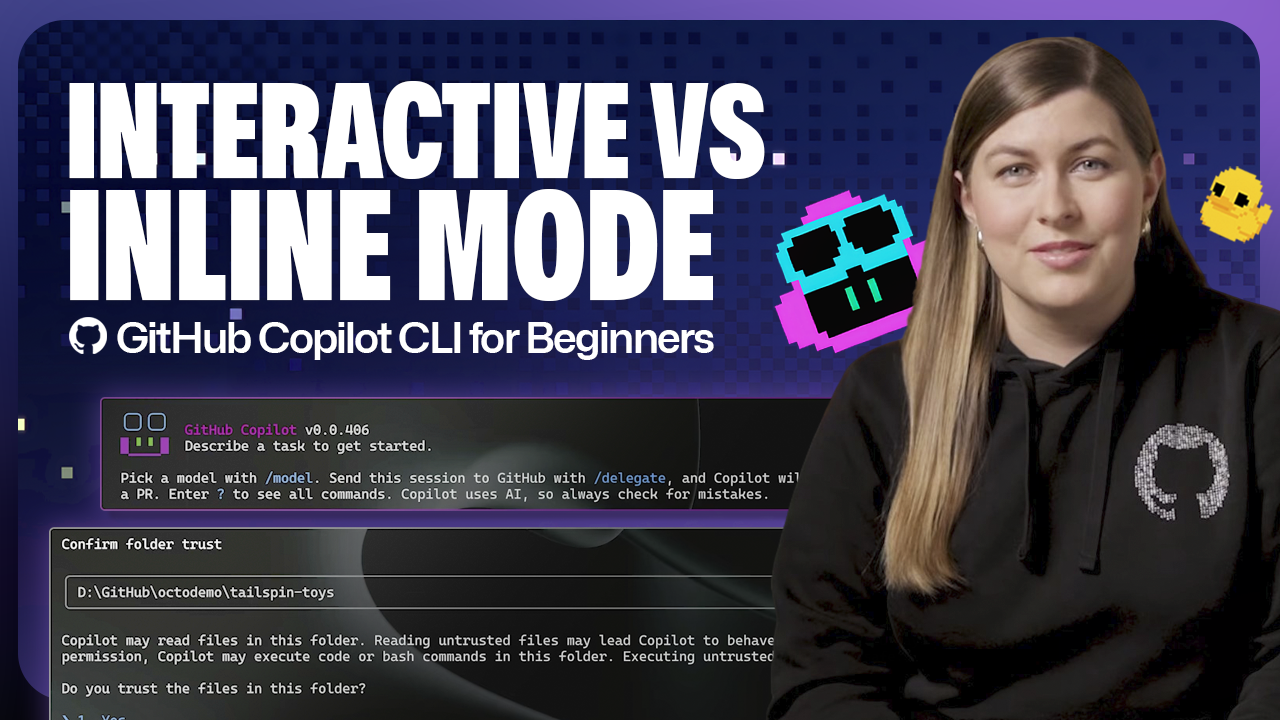
GitHub Copilot CLI brings the power of AI-assisted coding directly into your terminal, helping you generate commands, understand codebases, and automate tasks without leaving your shell. For beginners, the two primary modes—interactive and non-interactive—serve different purposes. This tutorial walks you through each mode, when to use them, and how to get started with practical examples. By the end, you'll be able to switch between modes seamlessly and avoid common pitfalls.
Prerequisites
- GitHub Copilot CLI installed and authenticated (
gh auth login) - Basic familiarity with command-line operations (navigating directories, running commands)
- A GitHub account with Copilot access (individual or business)
- A project folder with code (e.g., a sample repository) to test against
Interactive Mode: Dive Deeper into Your Work
What Is Interactive Mode?
Interactive mode offers a conversational, back-and-forth experience similar to chatting with an AI assistant. It’s the default when you launch the CLI with copilot. In this session, you can ask multiple questions, follow up, and even request Copilot to execute actions (like running a server or modifying files). Think of it as an ongoing partnership—perfect for exploratory tasks where you iterate on solutions.
How to Enter Interactive Mode
- Open your terminal and navigate to your project directory.
- Type
copilotand press Enter. - On first use, Copilot may ask for permission to read and modify files in the current folder. Type y to trust the folder.
- Now you’re inside the interactive session. Start with a question like: “How do I run this project locally?”
- Copilot will return a set of instructions. If you want it to execute the steps, ask: “Can you run it for me?”
- Copilot will analyze your project and run the server—all within the same session. You can continue asking follow-ups.
Example output:
Copilot: To run this Node.js project locally:
1. npm install
2. npm run dev

You: Can you run it for me?
Copilot: Analyzing project... Starting server on http://localhost:3000.
When to Use Interactive Mode
- Exploring an unfamiliar codebase
- Debugging step-by-step with guidance
- Rewriting code snippets collaboratively
- Learning new frameworks by asking iterative questions
Non-Interactive Mode: Speed and Simplicity
What Is Non-Interactive Mode?
Non-interactive mode is designed for quick, one-off prompts. Instead of entering a full session, you append a prompt directly to the copilot command using the -p flag (or --prompt). The AI returns an immediate answer and exits, dropping you back to your regular shell prompt. No follow-up conversation—just a fast, focused result.
How to Enter Non-Interactive Mode
- Ensure you’re at your normal shell prompt (not inside a Copilot session). Exit any active session with
exitif needed. - Type:
copilot -p "Quickly summarize what this repository does and the key folders." - Copilot will scan your project files and output a summary directly to the terminal.
Example:

$ copilot -p "What is the purpose of this repo?"
Copilot: This repository contains a React app for managing tasks (a todo list). Key folders:
- /src: source code
- /public: static assets
- /tests: unit tests
$ (back to shell prompt)
When to Use Non-Interactive Mode
- Generating quick code snippets
- Summarizing repository structure
- Automating tasks in scripts or CI/CD pipelines
- Getting a single answer without distraction
Common Mistakes and How to Avoid Them
- Forgetting to exit interactive mode before using non-interactive: If you type
copilot -p "..."while inside a session, Copilot may interpret the flag as a prompt within the conversation—leading to errors. Always exit withexitor Ctrl+C first. - Not trusting the folder: In interactive mode, if you skip the trust prompt (press n), Copilot won’t be able to read or write files. Rerun
copilotand answer “y”. - Using quotes incorrectly in non-interactive prompts: Enclose your prompt in double quotes (
"...") to prevent shell interpretation of special characters (like?or*). - Asking vague questions: Both modes work best with clear, specific prompts. For example, instead of “help me with code”, try “Generate a Python function to calculate factorial recursively”.
- Expecting interactive follow-ups in non-interactive mode: Non-interactive returns a single answer; if you need to refine, you must issue a new command from scratch. Choose the right mode for your goal.
Summary
GitHub Copilot CLI offers two complementary ways to harness AI assistance: interactive mode for collaborative, deep-dive sessions, and non-interactive mode for fast, one-shot queries. By mastering both, you can accelerate your workflow whether you’re exploring new code, debugging, or automating repetitive tasks.
Key takeaways:
- Launch interactive mode with plain
copilot; exit withexit. - Use
copilot -p "your prompt"for immediate answers. - Always trust the folder when prompted to unlock full capabilities.
- Be specific in your prompts for best results.
Now you’re ready to command the command line like a pro!
Related Articles
- How to Score the Best May MacBook Pro Deals: M5 Pro & M5 Max Models from $1,949
- How to Map and Mitigate the Expanded Attack Surface in AI Agents with Tools and Memory
- 10 Crucial Steps the UN Is Taking to Secure Our Climate Future
- Mastering Codex CLI: A Terminal-Based AI Assistant for Python Development
- AI Coding Agents with IDE-Native Search Tools Slash Task Times and Costs
- Amazon's 'Reacher' Scores Early Season 5 Renewal: 3 Key Takeaways for Fans
- 10 Critical Realities About AI in the Public Cloud You Need to Understand
- How to Secure AI Agents with HashiCorp Vault's New Agentic Identity Features