10 Fascinating Facts About NASA's STORIE Mission and Earth's Ring Current
Earth's magnetic field acts like an invisible shield, but it also traps a swarm of charged particles in a doughnut-shaped region called the ring current. This dynamic zone affects our technology during space weather events, yet many mysteries remain. NASA's upcoming STORIE mission will offer an unprecedented inside-out view of the ring current from the International Space Station. Here are 10 key facts you need to know.
- 1. What is the Ring Current?
- 2. Why Does It Matter?
- 3. Meet the STORIE Mission
- 4. Launch and Installation
- 5. Unique Inside-Out Perspective
- 6. Key Scientific Questions
- 7. Ring Current vs. Van Allen Belts
- 8. Space Weather Impacts on Technology
- 9. Solar Storms and the Ring Current
- 10. What We Hope to Discover
1. What is the Ring Current?
Encircling Earth at altitudes of about 10,000 to 60,000 kilometers, the ring current is a torus of low-energy charged particles—mostly protons and electrons—trapped by our planet’s magnetic field. Unlike the higher-energy particles in the Van Allen belts, these particles drift in opposite directions based on their charge, creating an electric current that flows around the equator. This current fluctuates in size and intensity, especially during geomagnetic storms.
2. Why Does It Matter?
The ring current plays a crucial role in how Earth responds to space weather. When the Sun ejects material toward us, the ring current can intensify, generating magnetic disturbances that induce currents in power lines and pipelines. It also contributes to surface charging on satellites, which can disrupt electronics. Understanding its behavior helps us protect critical infrastructure.
3. Meet the STORIE Mission
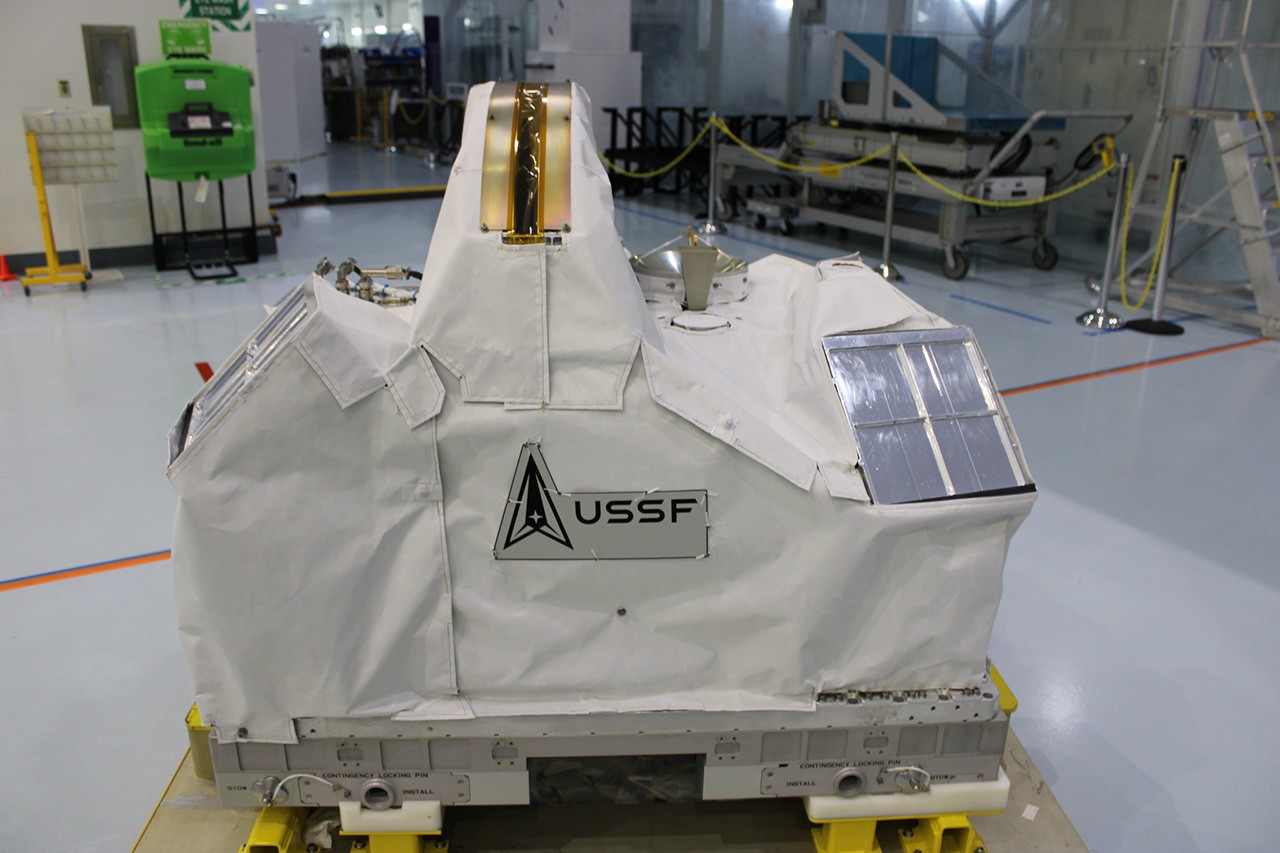
STORIE stands for Storm Time O+ Ring current Imaging Evolution. Developed at NASA’s Goddard Space Flight Center, this instrument is designed to observe the ring current in unprecedented detail. By imaging the oxygen ions (O+) that dominate during storms, STORIE will reveal how the ring current builds up, changes, and decays.
4. Launch and Installation
STORIE is scheduled to launch in May aboard SpaceX’s 34th commercial resupply mission to the International Space Station (ISS). It’s part of the Space Test Program – Houston 11 (STP-H11) payload, a collaboration between the U.S. Space Force and NASA. Once at the ISS, astronauts will robotically install STORIE on the station’s exterior, where it will operate for several years.
5. Unique Inside-Out Perspective
Most observations of the ring current come from satellites flying through it. STORIE, however, will look outward from the ISS, providing a global view. This perspective lets scientists see the entire ring current at once, tracking its shape and changes over time—a major advantage for studying its dynamics during storm events.
6. Key Scientific Questions
STORIE aims to answer fundamental questions: What particles make up the ring current? How does it gain and lose energy? What triggers its rapid intensification? Principal investigator Alex Glocer notes that understanding these particle populations is vital for predicting space weather effects on our technology.
7. Ring Current vs. Van Allen Belts
Although both are trapped radiation regions, the ring current contains lower-energy particles than the Van Allen belts. It overlaps the outer belt but fluctuates more dramatically during storms. While the belts are relatively stable, the ring current can swell and contract, creating strong electric currents that drive magnetic disturbances on the ground.
8. Space Weather Impacts on Technology
Changes in the ring current generate magnetic fluctuations that induce currents in long conductors like power grids and pipelines. Satellites in low Earth orbit and geostationary orbit can accumulate charge on their surfaces, leading to electrostatic discharges that may cause glitches or permanent damage. STORIE’s data will improve our ability to forecast such hazards.
9. Solar Storms and the Ring Current
During solar storms, the Sun releases bursts of plasma and magnetic fields that collide with Earth’s magnetosphere. This energizes the ring current, causing it to intensify and move closer to Earth. These events can trigger auroras but also pose risks. STORIE will monitor these storm-time changes in real time, helping scientists link solar activity to ring current responses.
10. What We Hope to Discover
Over its mission lifetime, STORIE will provide a continuous dataset of ring current images. Scientists expect to learn how oxygen ions from Earth’s upper atmosphere become trapped, how the ring current loses particles, and what processes control its evolution. This knowledge will refine space weather models and enhance our resilience to geomagnetic disturbances.
In summary, the ring current is a dynamic and influential part of near-Earth space. NASA’s STORIE mission, with its innovative vantage point, promises to unlock secrets that have eluded researchers for decades. As we prepare for its launch, we move closer to safeguarding our technology from the Sun’s unpredictable outbursts.
Related Articles
- Capturing Humanity's Reach: A Guide to Earth-Based Telescopic Imaging of Lunar Missions
- Bohmian Mechanics: A Realistic Take on Quantum Reality and How to Test It
- Bronze Age Burials Reveal a World of Innovation and Tradition in Central Europe
- Serotonin Surprise: New Study Links 'Feel-Good' Chemical to Worsening Tinnitus
- NASA Armstrong Flight Research Center Welcomes New Aircraft to Its Experimental Fleet
- Lightning's Cosmic Secret: Solar Flares and Particles Spark New Theory on Storm Origins
- Pinpointing Failure Sources in LLM Multi-Agent Systems: A New Benchmark and Automated Attribution Methods
- Ransomware Consolidation and Emerging Threats: Q1 2026 Analysis