Samsung Strike Looms: Potential Disruption to Global Chip Supply and Smartphone Production
Introduction
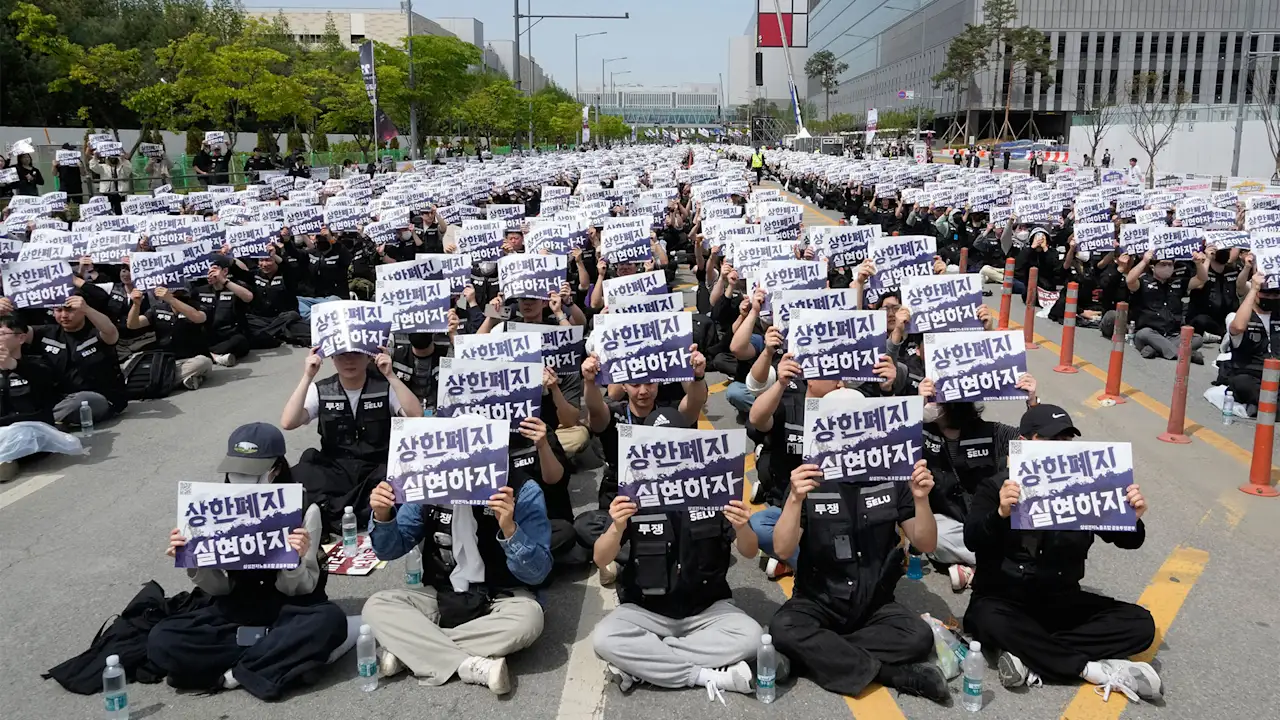
As Samsung Electronics edges closer to a historic strike, the tech world watches closely. The failure of last-minute wage negotiations on Wednesday marks a pivotal moment for the South Korean giant, threatening to upend global semiconductor supplies and ripple through the country's trade-dependent economy. With more than 70,000 workers poised to walk out, the stakes could not be higher—especially as demand for memory chips surges amid the artificial intelligence boom.
The Failed Negotiations
Management and union leaders at Samsung met for a final attempt to bridge their differences, but the talks ended without a breakthrough. Union leader Choi Seung-ho announced that unionized workers would begin an 18-day strike starting Thursday. Both sides blame each other for the impasse: the union accuses management of rejecting a government-mediated proposal, while the company claims the union is demanding excessively generous compensation packages for employees in loss-making divisions.
Efforts to reach a deal continue, with the two sides reconvening later Wednesday at the behest of Labor Minister Kim Younghoon, according to his ministry.
Stakes for the Semiconductor Industry
Samsung, along with its domestic rival SK Hynix, produces roughly two-thirds of the world's memory chips—components that are now in voracious demand thanks to AI. The company recently reported a staggering eightfold jump in operating profit for the January–March quarter, reaching 57.2 trillion won ($38 billion). Yet the union argues that workers have not shared fairly in this windfall.
Any significant disruption at Samsung's fabs could tighten an already strained global supply chain. Lee Jun, an expert at the Korea Institute for Industrial Economics and Trade, warned that the strike would likely drive memory chip prices even higher and delay AI infrastructure investments in other countries. Because supply is struggling to keep pace with demand, even a short work stoppage could have outsized effects.
Union Demands vs. Company Position
The core dispute centers on compensation. The union demands that Samsung commit to allocating 15% of its annual operating profit to employee bonuses and scrap the existing bonus cap, which limits bonuses to 50% of annual salaries. The company counters that these demands are excessive, highlighting the highly cyclical nature of the semiconductor business. Profits can swing wildly, and management fears such a rigid profit-sharing scheme would be unsustainable during downturns.
Government Intervention and Economic Impact
The South Korean government has stepped in with unusual urgency. Prime Minister Kim Min-seok warned in a televised address that a strike could cause up to 100 trillion won ($66 billion) in economic damage by disrupting Samsung's intricate semiconductor manufacturing processes. Government officials have even threatened to invoke rarely used emergency powers to force a settlement, underscoring the high stakes for the nation's export-driven economy.
Broader Effects on Consumer Electronics
The impact would not be limited to chips. Observers note that the strike is expected to hamper Samsung's production of smartphones and other consumer electronics, as the company relies on its own semiconductor supply for devices like its Galaxy phones and tablets. A prolonged work stoppage could delay new product launches and tighten supply of popular electronics just as the holiday season approaches.
Legal and Operational Constraints
In a partial victory for Samsung, a local court granted an injunction on Monday requiring the union to maintain minimum staffing levels to prevent damage to facilities and materials and ensure safe operations. The Suwon District Court also barred union members from taking certain actions, though the ruling does not block the strike entirely. This legal constraint may limit the disruption, but even reduced staffing could slow production lines.
Conclusion
Samsung now stands at a crossroads. The outcome of this labor dispute will not only shape the company's relationship with its workforce but also reverberate through global tech supply chains. As both sides continue to negotiate, the world waits to see whether a deal can be struck—or whether the first major strike in Samsung's history will become a reality, with consequences for AI, smartphones, and the broader economy.
Related Articles
- AMD FSR 4.1 Expansion: Bringing AI Upscaling to Older Radeon RX Graphics Cards
- The Psychology of Stars: How Hint.app Transforms Astrology into Self-Reflection
- Rust's NVPTX64-NVIDIA-CUDA Target: Baseline Upgrade and Impact on GPU Development
- MINISFORUM Unleashes Two New NAS Models: Up to 7 SSDs and Intel Panther Lake Support Confirmed
- The Asian Supply Chain Revolution: How Nvidia's Production Costs Shifted to 90%
- Legacy Graphics Hardware Gets a Modern Boost: Major Code Overhaul for Open-Source R300-R500 Radeon Driver Planned for 2026
- 3mdeb Achieves Critical Milestone in Open-Source Firmware for AMD Ryzen AM5 Motherboards
- Anthropic Explores Next-Gen AI Chips: Talks with UK's Fractile for DRAM-Less Inference Accelerators