The Role of Unknowable Mathematics in Safeguarding Secrets
Introduction: The Allure of the Unknowable
Mathematicians typically focus on what can be known, but the boundaries of knowledge themselves are equally fascinating. The concept of the unknowable—the statements or problems that can never be proven or solved within a given framework—has profound implications, especially in the realm of secrecy. By exploiting mathematical truths that are inherently undecidable or uncomputable, cryptographers can construct systems that are, in principle, impossible to break. This article explores how Gödel's incompleteness theorems and related ideas from computability theory have shaped modern cryptography.
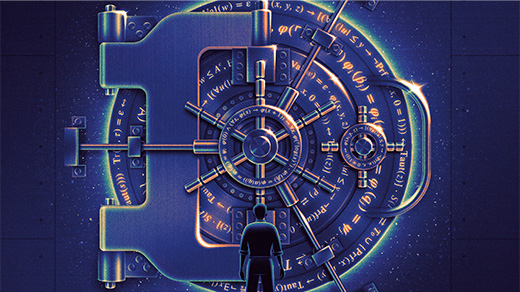
Gödel's Incompleteness Theorems: The Seeds of Unknowability
In 1931, logician Kurt Gödel published two revolutionary theorems that shattered the dream of a complete and consistent mathematical system. His first incompleteness theorem states that for any sufficiently powerful set of axioms, there exist true statements that cannot be proved within that system. The second theorem goes further: such a system cannot prove its own consistency. These results mean that the truth of some mathematical statements is forever beyond reach—they are unknowable within that formal framework.
Implications for Mathematical Truth
Gödel's work demonstrated that mathematics is inherently incomplete. No single set of axioms can capture all mathematical truths. This realization was initially unsettling, but it also opened up new possibilities. If some problems are unsolvable, then perhaps they can be used to create secure secrets—since breaking them would require solving an unsolvable problem. This idea is central to certain cryptographic schemes.
Turing's Halting Problem: The Uncomputable Frontier
Alan Turing, building on Gödel's ideas, introduced the halting problem in 1936. He proved that there is no general algorithm that can determine whether a given computer program will eventually halt or run forever. This is a classic example of an undecidable problem—it cannot be solved by any mechanical computation. The halting problem and other undecidable problems highlight the limits of computation, but they also provide raw material for cryptographic puzzles. For instance, a cryptographic key might be derived from a Turing machine's behavior in a way that is observable yet unpredictable.
From Unknowability to Cryptography
The leap from pure mathematics to practical secrecy comes through the concept of one-way functions—functions that are easy to compute in one direction but extremely hard to reverse. While the existence of proven one-way functions remains unproven, many cryptographic systems rely on problems that are believed to be intractable, such as integer factorization or the discrete logarithm problem. These problems are not undecidable in the strict sense, but they are computationally unknowable within practical time frames. Gödel's and Turing's insights provide a philosophical foundation: some secrets are safe because the knowledge needed to reveal them is logically unobtainable.
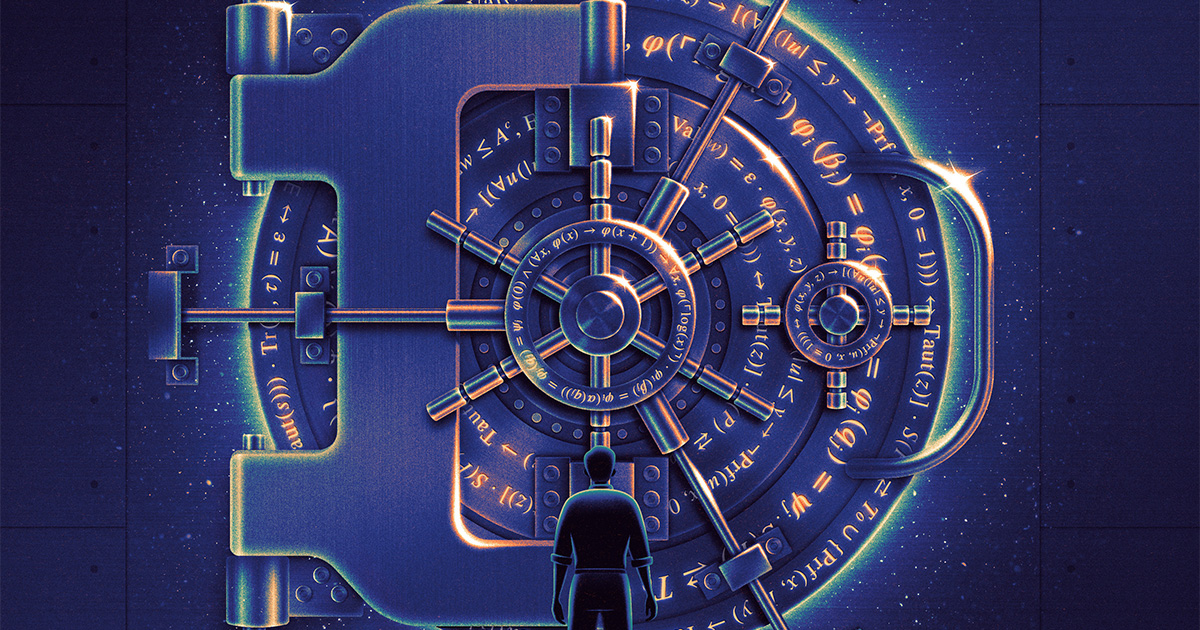
One-Way Functions and Unsolvable Problems
A more direct link between unknowability and secrecy appears in cryptography based on algorithmic information theory. The Kolmogorov complexity of a string—the length of the shortest program that outputs it—is known to be an uncomputable function. This means that the true randomness of a sequence cannot be fully determined by algorithm. By tapping into this ungraspable complexity, cryptographers can generate keys that are inherently unpredictable. Some protocols even use undecidable problems to create zero-knowledge proofs, where one party can prove knowledge of a secret without revealing it—a concept that echoes Gödel's self-referential statements.
Quantum Cryptography and Unmeasurability
The unknowable also appears in quantum mechanics, where the act of measurement disturbs a system. Quantum key distribution (QKD) exploits the fact that observing a quantum state inevitably alters it, making eavesdropping detectable. While not purely mathematical, this physical unknowability aligns with the spirit of Gödel's results: the very act of trying to know a secret can destroy it. Thus, quantum cryptography offers a different kind of unbreakable security, grounded in the laws of physics.
Conclusion: Embracing the Limits of Knowledge
The notion that some things are inherently unknowable might seem like a weakness, but cryptographers have turned it into a strength. By relying on mathematical undecidability, uncomputability, and physical unpredictability, we can design secret-keeping systems that are resilient against even the most powerful attacks. Gödel and Turing showed us that the boundaries of knowledge are not just obstacles—they are the very tools we need to hide secrets in plain sight.
Related Articles
- Enhance Terminal-Based Observability with the gcx CLI: Bridging Agents and Production Insights
- Gödel's 'Unknowable' Math Powers New Frontier in Unbreakable Encryption
- Microsoft and GitHub Invade PyCon US 2026: What to Expect at the Conference
- 8 Promising Ways AI Can Enhance Accessibility for People with Disabilities
- Anthropic Launches Security Overhaul for Claude Agents: Credentials No Longer Travel Inside AI
- JetBrains Unveils 2026 Vision: AI and Traditional Coding to Coexist in Integrated Development Environments
- 10 Critical Facts About Predicting Volcanic Eruptions Like Weather Forecasts
- SkiaSharp 4.0 Preview 1: What .NET Developers Need to Know