ChatGPT Gains Personal Finance Superpowers: Link Your Bank Accounts for Budgeting and Investment Insights
ChatGPT Gains Personal Finance Superpowers: Link Your Bank Accounts for Budgeting and Investment Insights
Breaking News: OpenAI today launched a revolutionary personal finance feature for ChatGPT, enabling Pro subscribers in the United States to connect their bank accounts, credit cards, investment portfolios, and other financial accounts directly to the chatbot for real-time budgeting advice, spending analysis, and investment tracking. The integration, powered by Plaid, gives ChatGPT access to data from over 12,000 financial institutions, making it one of the most comprehensive AI-powered financial assistants available.
"This is a game-changer for how people interact with their money," said Dr. Elena Torres, a fintech expert at the University of California, Berkeley. "By securely linking accounts, ChatGPT can provide personalized guidance that adapts to actual spending and saving patterns, something traditional budgeting apps have struggled to achieve."
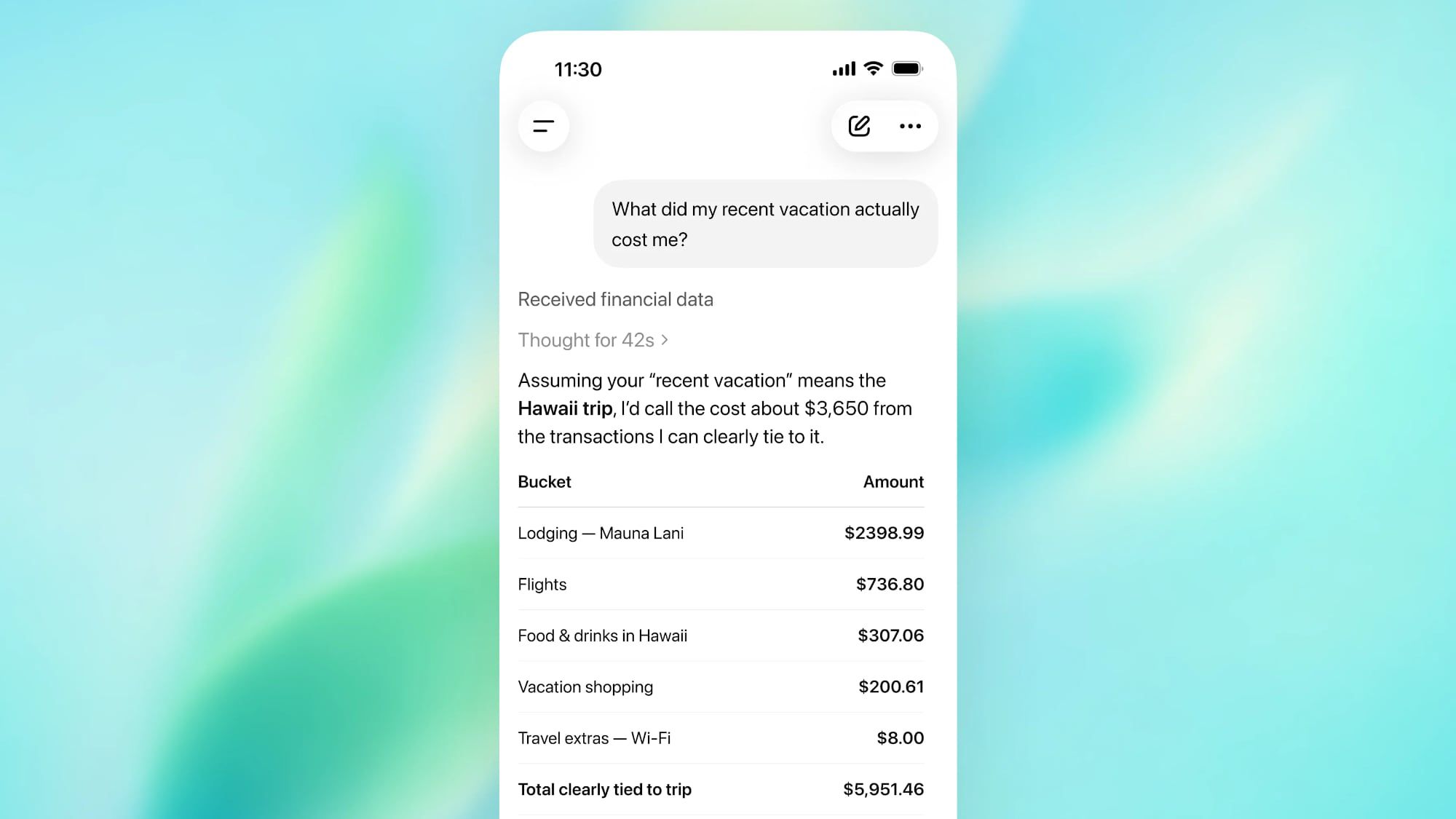
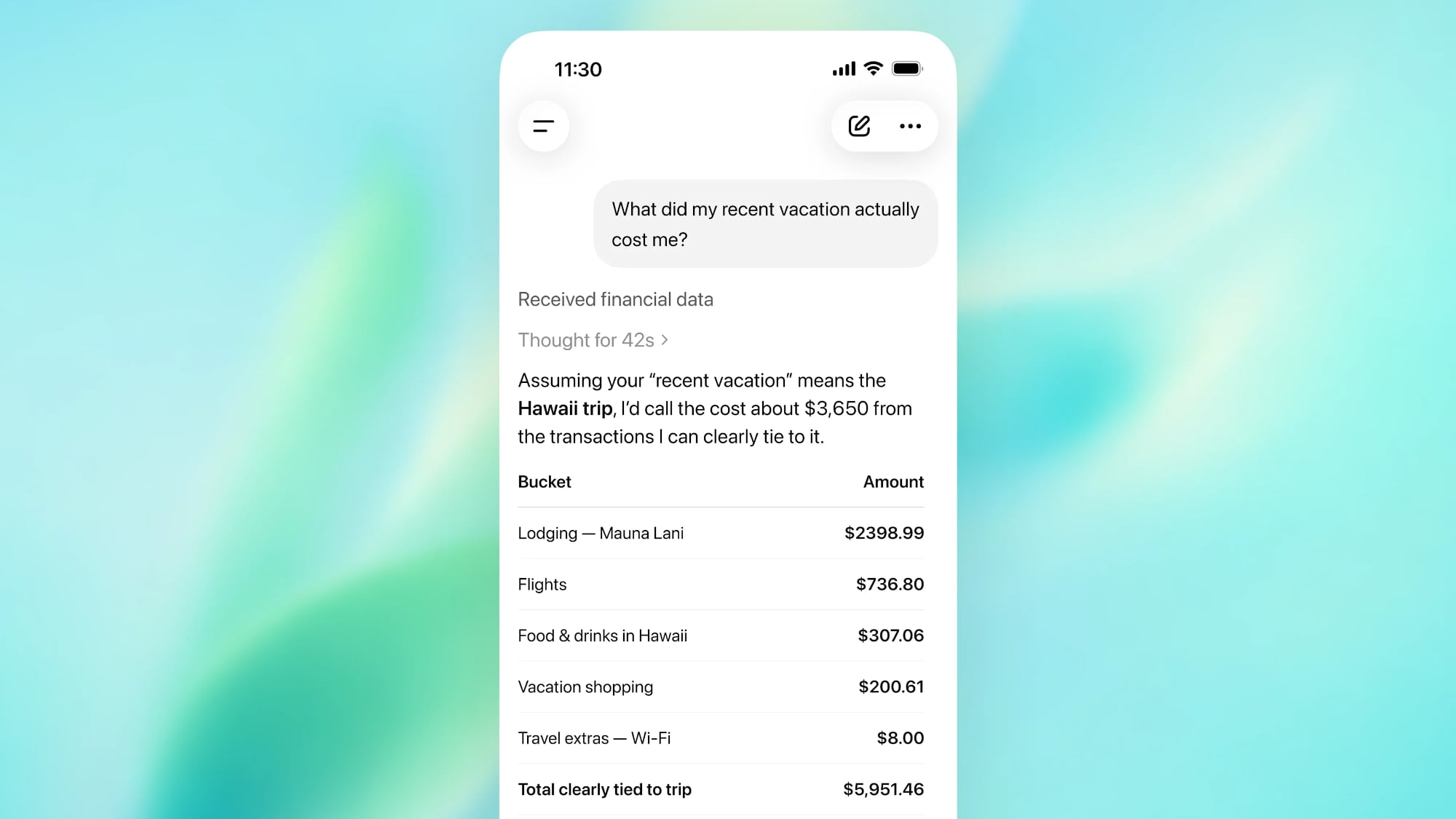
The chatbot will display a dashboard showing a user's balances, recent transactions, subscription costs, upcoming bills, and portfolio performance. Users can then ask natural-language questions such as:
- "Help me build a plan to buy a house in my area in the next 5 years."
- "What did my recent vacation actually cost me?"
- "I feel like I've been spending more recently. Has anything changed?"
- "Can I afford to take a lower-paying job if it gives me more flexibility to be home with the kids?"
- "What's the biggest risk in my portfolio?"
- "Look at my subscriptions and help me choose what to cancel."
OpenAI stressed that the connection is read-only: ChatGPT can see balances, transactions, investments, and liabilities, but it cannot view full account numbers or initiate any transfers or payments. "We designed this feature with privacy and security as our top priority," said an OpenAI spokesperson. "Users remain in full control of their data and can disconnect their accounts at any time."
The new capability is available now only to ChatGPT Pro subscribers located in the United States, on both the iOS app and the web version. OpenAI plans to extend support to ChatGPT Plus subscribers in the coming months after refining the feature based on feedback from Pro users. Additionally, while the initial integration uses Plaid, OpenAI announced that support for Intuit will be added soon, broadening the range of financial institutions users can link.
Background
OpenAI has been steadily expanding ChatGPT's capabilities beyond text generation into practical, real-world applications. The company launched plugins and code interpretation earlier this year, and now personal finance represents the next logical step in making the AI assistant a daily utility. Plaid, the data aggregation partner, is a trusted middleware used by major financial apps such as Venmo, Robinhood, and SoFi, ensuring a reliable and secure connection to thousands of banks and credit unions.
The move comes as consumers increasingly seek automated, conversational tools to manage their finances. Traditional budgeting apps often require manual input or lack the flexibility of natural language queries. ChatGPT's integration aims to bridge that gap by combining AI reasoning with real-time financial data.
What This Means
For users, this feature promises a more intuitive and personalized approach to financial management. Instead of poring over spreadsheets or navigating complex budgeting software, they can simply ask ChatGPT questions in plain English and receive tailored advice. This could improve financial literacy and help people make smarter decisions about spending, saving, and investing.
However, security experts caution that any online connection to financial accounts introduces risk. "While OpenAI has implemented read-only access and encryption, users must remain vigilant about data breaches and phishing attacks," warned Marcus Reed, a cybersecurity analyst at CyberShield. "No system is 100% bulletproof, and linking sensitive accounts to an AI chatbot should be done with careful consideration." The long-term impact on user trust and adoption will depend on how well OpenAI maintains security and privacy standards as the feature evolves.
Related Articles
- Anthropic Introduces Dedicated Credit Pools for Agent SDK Usage
- Unlocking Remote Coding: How to Access OpenAI Codex via ChatGPT on Your Phone
- Google's New 'AI Ultra Lite' Subscription: What We Know So Far
- How to Self-Host LLMs Without Breaking the Bank on a GPU
- OpenAI's GPT-5.5 Instant: New Memory Sources Bring Partial Observability to ChatGPT
- How Docker's Agent Fleet Transforms Software Delivery with Autonomous AI Teams
- Google Docs Gemini Now Remembers Your Preferences: No More Repeating Instructions
- Building Resilient Development Workflows: Running Local AI with Gemma 4 and LM Studio During Power Outages