How to Implement Drone Traffic Prioritization for Emergency Response in Crowded Skies
Overview
As commercial drones become as common as delivery trucks, the skies above our cities are filling up fast. But when a police drone needs to chase a suspect or a firefighting drone must reach a blaze, those emergency flights should get the same priority as an ambulance on the ground. A recent field test in North Texas, conducted by NASA, the FAA, and local public safety agencies, proved that advanced airspace tools can give first responder drones a clear path. This step-by-step guide shows how you—as a public safety agency, technology developer, or drone operator—can replicate that success and ensure emergency drones always have right of way.
What You Need
- Regulatory Partners – Collaboration with the Federal Aviation Administration (FAA) and local airspace authorities to designate a test region (e.g., an FAA-designated UAS Integration Pilot Program area).
- Public Safety Agencies – Police, fire, and rescue departments willing to participate and communicate in real time.
- Industry Partners – Drone delivery companies and air traffic management (UTM) providers that can adjust commercial flight paths.
- Airspace Prioritization Software – Tools that detect emergency drone launches and automatically reroute other drones (similar to NASA's Air Traffic Management and Safety project systems).
- Data Collection Equipment – Loggers for flight trajectories, communication logs, and predictive analytics to measure safety and efficiency.
- Unpredictable Route Capability – Drones that can perform sudden direction changes (e.g., following an erratic vehicle) to simulate real emergency scenarios.
- Communication Protocols – Shared channels or APIs between agencies to prioritize multiple simultaneous emergency missions.
Steps to Establish Priority Drone Airspace for First Responders
Step 1: Assemble a Multi‑Stakeholder Coalition
Begin by forming a partnership that mirrors the North Texas team: NASA, local public safety organizations, industry drone operators, and the FAA. Each entity brings essential expertise—regulatory knowledge, real‑world emergency workflows, and commercial drone operations. Sign memoranda of understanding that define roles, data sharing, and liability. Without this coalition, airspace prioritization cannot be tested or scaled.
Step 2: Designate a Controlled Test Airspace
Work with the FAA to secure a region where commercial drone deliveries already fly daily (as in North Texas). This area becomes your sandbox. Establish geofences and temporary flight restrictions that allow you to override normal traffic. Ensure all commercial operators in the region agree to participate, so when an emergency drone launches, they can pause or reroute their missions.
Step 3: Create Real‑Time Communication Channels Between Agencies
During the NASA exercise, multiple public safety officials communicated to prioritize which drone should access the airspace first. Set up a shared digital command center (e.g., a chat room or API) where police, fire, and rescue can broadcast their mission type, urgency, and estimated flight path. This prevents conflicts when two emergencies occur simultaneously.
Step 4: Develop and Integrate Air Traffic Management Tools
Implement a UTM (UAS Traffic Management) system that can detect an emergency drone’s takeoff and automatically signal nearby commercial drones to move aside. NASA’s tools, such as those from the Air Traffic Management and Safety project, use algorithms to balance efficiency and safety. Your system should log every reroute and calculate the impact on commercial operations.
Step 5: Simulate Unpredictable Emergency Flights
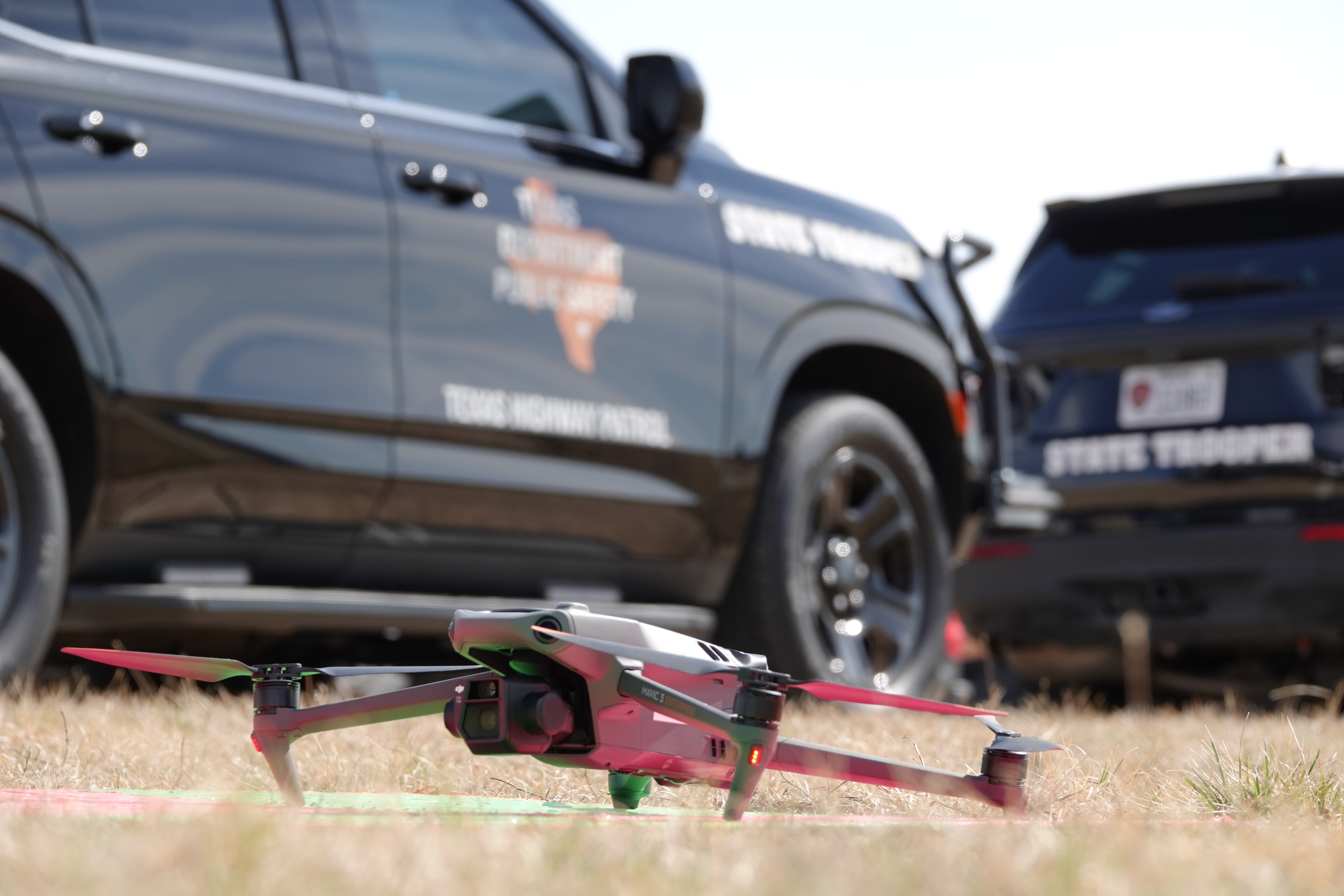
First responder drones rarely fly straight lines—they chase suspects, search for missing persons, or scan disaster zones. In the North Texas test, researchers had a drone follow an SUV driving erratically to mimic a vehicle pursuit. Recreate such scenarios in your test region. Let the emergency drone change direction suddenly while your UTM tool adjusts commercial traffic in real time. Measure the reaction time and the safety buffer maintained.
Source: www.nasa.gov Step 6: Collect and Analyze Performance Data
During and after each simulation, capture flight logs, communication records, and any near‑miss events. The NASA team used this data to understand how unexpected movements affect nearby drones. Look for patterns: Did commercial drones always yield? Was there a delay? Quantify the time saved for emergency responders compared to a non‑priority scenario.
Step 7: Refine Prioritization Algorithms Based on Results
Use the data to tune your systems. For example, if a sudden 90‑degree turn caused a commercial drone to enter a no‑fly zone, adjust the buffer radius or the warning time. Iterate between simulation and real flights until the emergency drone has a consistently clear corridor without unduly disrupting commerce.
Step 8: Scale and Standardize the System
Once your test region demonstrates reliable prioritization, work with the FAA to expand the framework to other cities. Document standard operating procedures, share your open‑source tools if possible, and train other public safety agencies. The ultimate goal is a nationwide system where any first responder drone gets the same “lights and sirens” treatment that ground emergency vehicles enjoy today.
Tips for Success
- Balance Safety with Commercial Needs – As NASA’s Abhay Borade noted, the key is to prioritize safety while using airspace efficiently. Avoid giving emergency drones a blanket override; instead, use dynamic prioritization that considers real‑time density and risk.
- Prepare for the Unpredictable – Emergency routes are never set. Your UTM system must handle sudden changes without causing cascading re‑routes. Test with the most erratic patterns you can imagine.
- Foster Strong Communication Culture – The Texas exercise showed that when multiple agencies coordinate, prioritization that works smoothly. Invest in training and cross‑agency drills.
- Start Small, Then Scale – One region like North Texas is enough to prove concept. Once validated, replicate the model in other FAA‑designated zones.
- Leverage Existing Frameworks – Use NASA’s open data and published research (see Step 4) to shorten your development cycle. You don’t need to reinvent the tools—adapt them.
By following these steps, you can help clear the sky for those who protect us on the ground. The future of drone operations depends on safety, responsibility, and scalability—and prioritization for first responders is the critical first step.
Related Articles
- Reversing Liver Aging Through Gut Microbiome Rejuvenation: A Step-by-Step Protocol
- NASA's Next-Generation Mars Helicopters: Building on Ingenuity's Legacy
- Sunlight Powers Quantum Ghost Imaging in a Breakthrough Experiment
- Perseverance Rover's Latest Selfie Reveals Mars' Ancient Cliffside Secrets
- How to Use a Gravity Assist: Lessons from NASA's Psyche Mission Flyby of Mars
- Mastering Long-Horizon Planning with GRASP: A Q&A Guide
- How to Capture a High-Resolution View of Mars' South Pole During a Spacecraft Flyby
- Hermes Agent vs OpenClaw: How Nous Research’s Self-Improving Agent Took the Lead in OpenRouter Rankings