The Secret Mathematical Patterns in Plant Solar Adaptation
Introduction: The Challenge of Living on Sunlight
Surviving solely on sunlight is a precarious strategy. Plants must navigate a world where solar radiation fluctuates wildly—from the gentle dawn rays to the intense midday glare, from dappled shade to full sun exposure. This variability poses a constant threat: ultraviolet light can damage DNA and break down essential molecules, while sudden changes in light intensity can overwhelm the delicate photosynthetic machinery. To thrive, plants have evolved sophisticated mechanisms that operate like a complex mathematical dance, balancing energy capture with protection.
The Mathematical Dance Within Cells
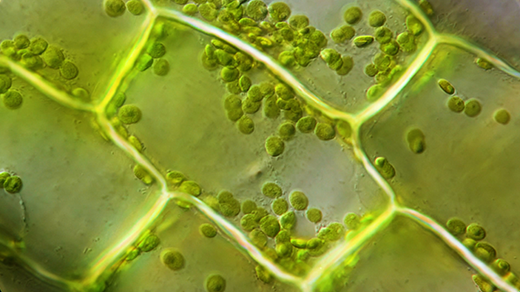
At the heart of this adaptation lies a hidden choreography of molecules and organelles. Researchers have discovered that plant cells orchestrate their responses to light using mathematical principles—feedback loops, oscillations, and probabilistic shifting. This isn't a random scramble but a precise, calculated movement that optimizes survival.
Chloroplast Movement: A Cellular Ballet
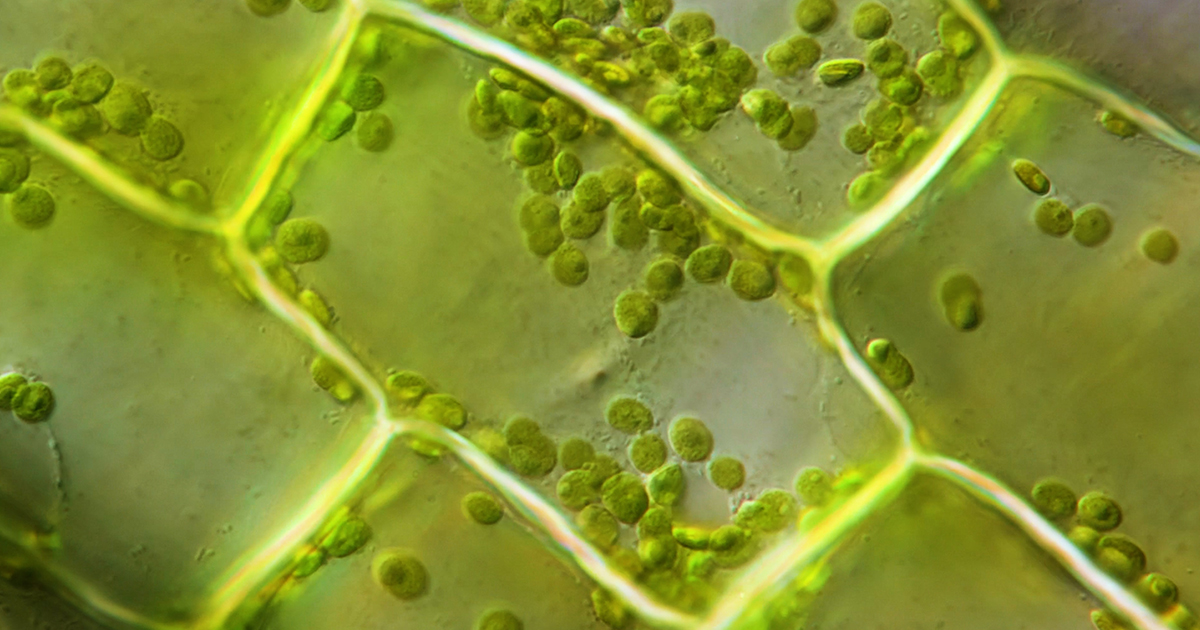
One of the most visible manifestations of this dance is the movement of chloroplasts. These pigment-containing organelles can migrate within the cell depending on light conditions. In low light, they spread out to capture maximum photons; in high light, they clump together or move to the sides to avoid damage. This movement follows mathematical gradients and signal propagation that researchers model using reaction-diffusion equations. The result is a dynamic pattern that changes continuously as light intensity shifts.
Photoprotection: The Safety Net
When light becomes too intense, plants activate photoprotective mechanisms. One key process is non-photochemical quenching (NPQ), which dissipates excess energy as heat. The kinetics of NPQ follow a mathematical pattern involving multiple timescales—fast, slow, and very slow recovery phases. This ensures that plants can respond to sudden sunflecks but also conserve energy when light fades. Understanding these feedback loops is crucial for improving crop resilience.
Feedback Loops and Oscillations
Plants rely on intricate feedback loops to balance light harvesting and protection. For example, the state transition mechanism adjusts the distribution of excitation energy between photosystems I and II. This involves a rhythmic shuttling of light-harvesting complexes, which can be described by differential equations capturing the change in antenna size over time. Such oscillations allow plants to fine-tune their efficiency throughout the day.
The Role of Circadian Rhythms
Superimposed on these short-term responses is the plant's internal clock. Circadian rhythms modulate the sensitivity to light, preparing the photosynthetic apparatus for expected changes. Mathematical models of these rhythms show how they entrain to external light-dark cycles, creating a predictive framework. This anticipatory dance helps plants preemptively adjust their metabolism, avoiding sudden shocks.
Mathematical Models Unlock Better Crops
By decoding the hidden mathematical patterns in plant cells, scientists can now simulate and predict how different species will respond to variable light. These models incorporate parameters like chloroplast mobility, quenching rates, and circadian phase. Applications in agriculture aim to design crops that can withstand fluctuating environments—think of a cloud obscuring the sun and then revealing it again.
Applications in Agriculture and Beyond
Enhancing photoprotection mechanisms could lead to strains that waste less energy under high light, improving yield. Similarly, breeding for faster chloroplast movement might help plants bounce back quicker after shade. These strategies rely on the underlying mathematics: understanding the optimal dance steps allows us to tweak the performers.
Conclusion
The hidden mathematical dance inside plant cells is not just a scientific curiosity—it's a roadmap for future agricultural innovation. By appreciating the complex interplay of movement, feedback, and timing, we can help plants thrive in a world where light is never constant. As the original text hints, "Think of a cloud obscuring..." the sun; now we know the microscopic choreography that follows.
- Key takeaway: Plants use mathematical patterns to balance energy capture and protection.
- Practical insight: Modelling these patterns can guide crop improvement.
- Future direction: Integrating circadian and photoprotective models for resilient crops.
- Chloroplast movement follows reaction-diffusion equations.
- NPQ has multiple kinetic phases.
- State transitions involve oscillatory antenna adjustments.
Related Articles
- Star Wars Day 2025: Best Deals on Games, Lego, and Merchandise
- Unmasking the Mystery: Who Is the Real Mr. Karate in Fatal Fury: City of the Wolves?
- GeForce NOW May 2025: New Games, RTX 5080 Power, and Cloud Gaming Upgrades – Your Questions Answered
- Crimson Desert Overhauls Combat and Faction Systems in Massive New Update
- How to Secure a Steam Controller Without Paying Scalper Prices
- Star Wars Games: Essential Titles and Their Unique Stories
- Seamless Login and New Games: Gaijin Single Sign-On Arrives on GeForce NOW
- Steam Controller Gets First Phone Mount: Basegrip Drops Monday