How Meta Automates Capacity Efficiency at Hyperscale with Unified AI Agents
Introduction: The Challenge of Efficiency at Scale
When your platform serves over three billion people, even a tiny 0.1% performance regression can translate into massive additional power consumption. Meta’s Capacity Efficiency Program tackles this challenge head-on by embedding domain expertise into AI agents that automate both finding and fixing performance issues. These agents now recover hundreds of megawatts (MW) of power—enough to power hundreds of thousands of American homes for a year—while compressing hours of manual investigation into mere minutes. This approach allows Meta to scale its efficiency efforts without proportionally increasing headcount.
The Two-Pronged Strategy: Offense and Defense
Meta views capacity efficiency as a two-sided coin: proactive optimization (offense) and rapid regression mitigation (defense). Both are critical at hyperscale, and AI accelerates each side.
Offense: Proactive Optimization at Scale
On the offensive side, engineers actively search for opportunities to make existing systems more efficient. They identify code changes that can reduce resource usage and deploy them across the fleet. However, the volume of potential optimizations far exceeds human capacity to investigate them manually. AI-assisted opportunity resolution now expands to more product areas each half, handling a growing number of wins that engineers would never get to manually. This transforms a bottleneck into a scalable machine.
Defense: Catching Regressions Automatically
On the defensive side, Meta relies on FBDetect, its in-house regression detection tool. FBDetect catches thousands of regressions every week. But detection alone isn’t enough—each regression must be root-caused to a specific pull request and mitigated. Without automation, this process would consume enormous engineering time. Faster automated resolution means fewer megawatts wasted as regressions compound across the fleet. Together, offense and defense form a loop that keeps growing MW delivery without proportionally growing the team.
The AI Agent Platform: Encoded Expertise, Standardized Tools
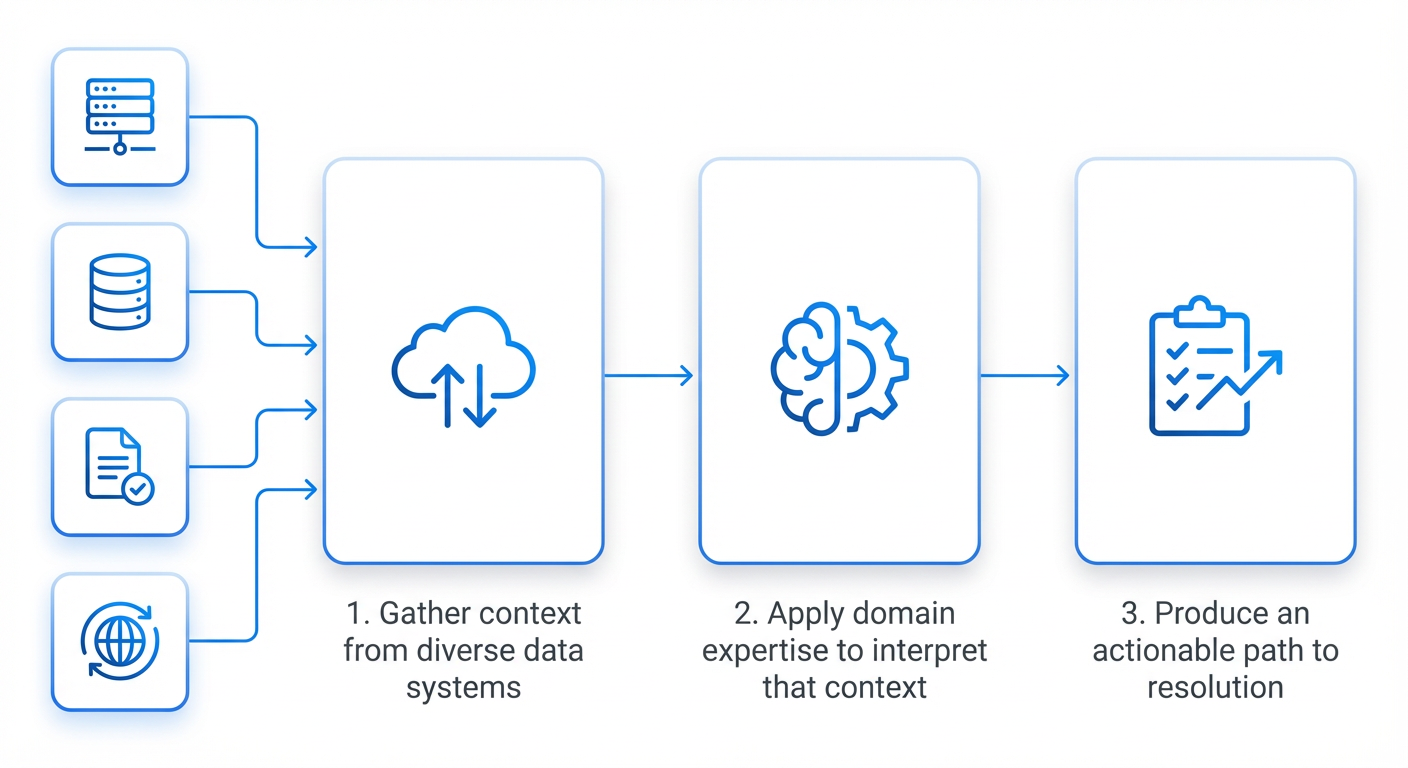
The core innovation is a unified AI agent platform that encodes the domain expertise of senior efficiency engineers into reusable, composable skills. These skills are combined through standardized tool interfaces, allowing agents to autonomously investigate issues, diagnose root causes, and even generate pull requests for fixes.
How It Works
- Standardized tool interfaces provide a consistent way for AI agents to interact with Meta’s infrastructure, from monitoring dashboards to code repositories.
- Encoded domain expertise captures the heuristics and decision-making processes that experienced engineers use to trace performance problems.
- Automated investigation compresses what once took ~10 hours of manual work into about 30 minutes of AI-driven analysis.
- End-to-end automation spans from identifying an efficiency opportunity to preparing a ready-to-review pull request.
This platform is now the backbone of the Capacity Efficiency Program. It enables engineers to focus on higher-level innovation rather than routine triage.
The Impact: Power Savings and Productivity Gains
The results speak for themselves. Hundreds of megawatts have been recovered—equal to powering hundreds of thousands of homes annually. The time saved from manual regression investigation allows the team to scale their impact across more product areas without proportionally increasing headcount. The ultimate ambition is a self-sustaining efficiency engine: a system where AI handles the long tail of optimization opportunities, continuously improving performance at hyperscale.
Looking Ahead: A Self-Sustaining Efficiency Engine
Meta envisions a future where the AI agents themselves identify, diagnose, and fix the majority of efficiency issues automatically. The program’s current successes are just the foundation. As the platform learns from more data and scenarios, the offense and defense loops will become even tighter, further reducing waste and freeing engineers to innovate on new products. This is not just about saving power—it’s about redefining how hyperscale systems maintain efficiency in a world of continuous change.
Conclusion
Meta’s unified AI agent platform represents a leap forward in capacity efficiency at hyperscale. By encoding expert knowledge into automated agents, the company has turned a human bottleneck into a scalable, self-improving system. The result: hundreds of megawatts saved, thousands of regressions resolved faster, and a clear path toward a fully autonomous efficiency engine.
Related Articles
- 10 Crucial Insights: Why eBPF Is Overtaking User-Space Agents for Security Observability
- Resolving Stuck Congestion Window in QUIC with CUBIC: A Step-by-Step Guide
- Enhancing dma-buf for User-Space Read and Write Operations
- Ubuntu 26.10 Has a Surprising Codename: Meet 'Stonking Stingray'
- How to Get Started with gThumb 4.0 Alpha: A Guide to the GTK4/libadwaita Revamp
- Making Transparent Huge Pages Truly Massive: The Push for 1GB Support
- Linux Mint Shifts Strategy: Regular HWE ISOs to Bridge Hardware Gap Until December Release
- How Meta's AI-Powered Agents Supercharge Hyperscale Efficiency