Microsoft Launches Unified Python Environments Extension for VS Code After Year-Long Preview
Microsoft has officially released the Python Environments Extension for Visual Studio Code, bringing a unified workflow for managing Python environments, interpreters, and packages. The extension is rolling out to all users over the next few weeks, with an immediate opt-in option via the python.useEnvsExtension setting.
'After extensive community feedback and real-world testing, we're excited to deliver a streamlined experience that eliminates the fragmentation across tools like venv, conda, pyenv, poetry, and pipenv,' said a Microsoft product manager. 'This extension just works—no setup required.'
Background
Python developers have long struggled with a fragmented ecosystem of environment management tools. The Python Environments Extension consolidates discovery, creation, and switching into a single interface, using the PET (Python Environment Tool) scanner—a Rust-based engine already proven in the existing Python extension.
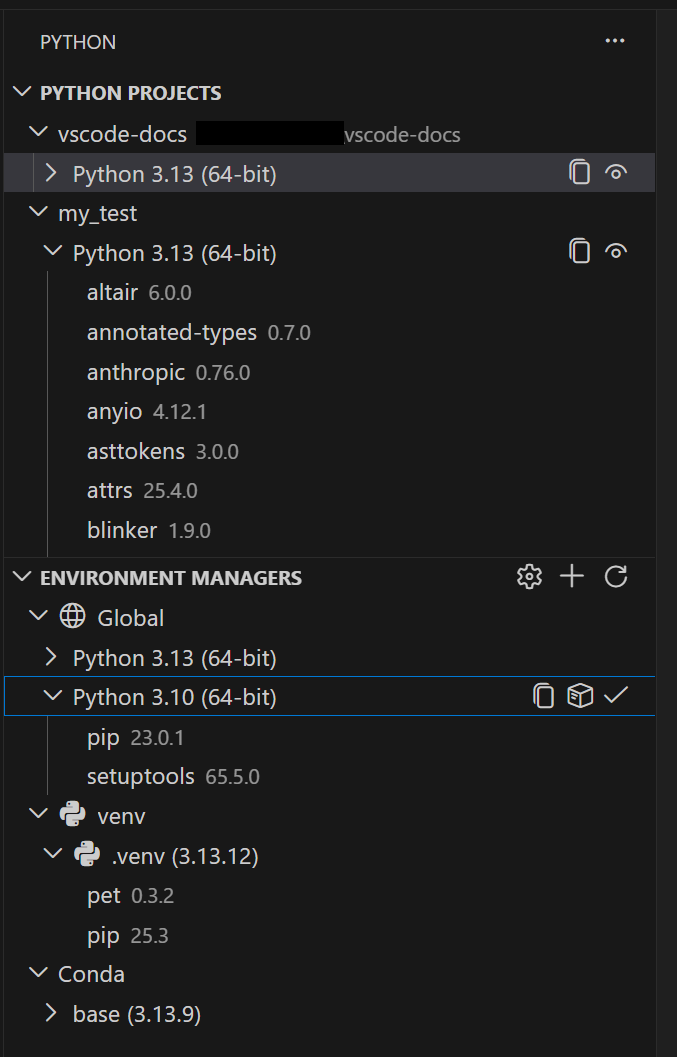
The extension automatically discovers environments from all major managers, including venv, conda, pyenv, poetry, pipenv, and system Python installs. Users with non-standard locations can configure workspace-level search paths using glob patterns or set global search paths for shared directories.
What This Means
For developers, this extension eliminates the need to juggle multiple CLI tools. 'You can create, delete, switch, and manage environments from a single UI—regardless of which tool created them,' the product manager explained. 'Most users will experience everything working out of the box.'
The extension also integrates with uv for faster environment creation. If uv is installed, the extension automatically uses it for creating venv environments and installing packages, which is 'significantly faster than standard tools, especially in large projects,' according to the team. This behavior is controlled by the python-envs.alwaysUseUv setting, enabled by default.

Environment creation now offers two modes: Quick Create and Custom Create. Quick Create builds an environment using the default manager, the latest Python version, and any workspace dependencies found in requirements.txt or pyproject.toml. Custom Create allows users to choose the environment manager, Python version, environment name, and dependency files. Both venv and conda support direct creation from VS Code; other managers like pyenv, poetry, and pipenv are discovered from their respective CLI tools.
Additionally, the extension introduces Python Projects, which map environments to specific folders or files—a crucial feature for monorepo setups. This solves the common problem of associating the correct environment with different parts of a project structure.
The extension works alongside the existing Python extension and requires no separate installation. Users can immediately opt in by setting python.useEnvsExtension to true. The rollout to all users will occur automatically in the coming weeks.
Related Articles
- The Unsettled Foundation: Why a Core Axiom Still Divides Mathematicians
- How to Spot and Prevent Fabricated Citations in Your Research Papers
- AAEF v0.6.0: A Structured Approach to Safe Agentic AI Adoption
- 5 Key Takeaways from Daniel Stenberg's Evaluation of Anthropic's Mythos AI
- Pixel 10's May 2026 Update Locks Bootloader, Downgrade Path Blocked Amid Brick Risk
- HashiCorp Vault's AI Agent Support: Identity, Authorization, and Ephemeral Controls
- Mastering Corporate Diplomacy: A Step-by-Step Guide to Apple CEO's China Trip Invitation and Leadership Transition
- Capcom's Generative AI Strategy: Enhancing Creativity and Efficiency in Game Development